Shared family calendar vs. childcare coordination.
A calendar is good at events and reminders. Childcare coordination asks for the context people need to share responsibility.
The same Thursday, two questions.
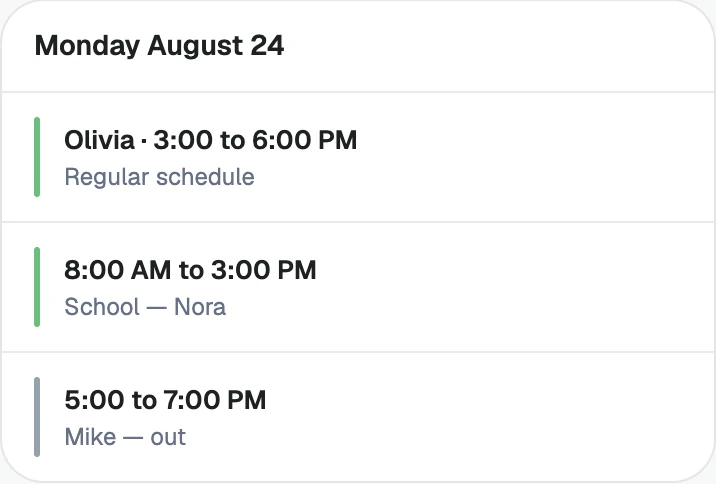
Illustrated example from the guide
Mike is Nora’s parent. Olivia is Nora’s caregiver.
- Nora at school
- Pickup with Olivia · School → home
- Care with Olivia
| A calendar question | A coordination question |
|---|---|
| When does Nora’s school day end? | Who picks up Nora at 3:00 PM? |
| What is on Thursday afternoon? | Who has Nora until 6:00 PM? |
Illustrated questions about the guide’s example; no calendar-provider integration is implied.
When a shared calendar is enough
A shared calendar may be enough when one adult handles nearly all care, plans change rarely, and everyone only needs event times and reminders. A coordination tool becomes more relevant as more people share responsibility and the exceptions matter as much as the regular plan.
Keep using your calendar.
Subscribe to Milava in Apple Calendar or Google Calendar for free. Make changes in Milava; the read-only subscription refreshes on your calendar app’s schedule, so updates can take time.
If your assistant can read the calendar subscribed to Milava, try asking about the care events it contains. First ask it to find a specific Milava event: some connections cannot read subscribed calendars. Answers depend on the events and refresh time available to that assistant. Use Milava to check current coverage and make changes.
Common questions
When is a shared family calendar enough?
A shared calendar may be enough when one adult handles nearly all care, plans change rarely, and everyone only needs event times and reminders.
Can Milava appear in Apple or Google Calendar?
Subscribe to Milava in Apple Calendar or Google Calendar for free. Make changes in Milava; the read-only subscription refreshes on your calendar app’s schedule, so updates can take time.
Does Milava replace groceries, chores, or payroll tools?
No. Milava stays focused on family childcare coordination. It is not a grocery list, chore chart, caregiver marketplace, payroll service, baby tracker, or location-tracking app.